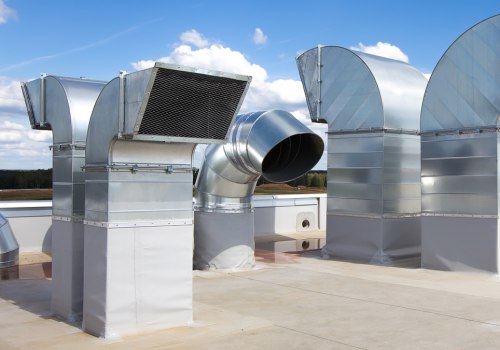
We've seen it hundreds of times across Central Florida—homeowners invest in premium equipment only to discover bedrooms running five to eight degrees warmer than living areas. The culprit isn't the unit itself. It's unbalanced airflow through ductwork that was never calibrated to match the new system's output.
Airflow balancing fine-tunes how conditioned air distributes room by room. Technicians adjust dampers, modify register positions, and measure static pressure to eliminate hot spots and cold pockets. In Ocoee's humidity-heavy climate, this process also prevents the moisture problems that unbalanced systems create—something our local experience has taught us to prioritize.
This guide walks you through exactly what happens during professional airflow balancing, the specific tests technicians perform, and how to recognize when your system needs adjustment.
Quick Answers
HVAC Installation in Ocoee
The short answer: Successful HVAC installation in Ocoee requires permits, licensed contractors, and post-installation airflow balancing to handle Central Florida's demanding climate.
What Ocoee homeowners need:
Permit from City of Ocoee Building Division (407-905-3104)
Florida DBPR-licensed contractor (verify at myfloridalicense.com)
Manual J load calculation for proper sizing
Airflow balancing 1–2 weeks after installation
Available incentives:
OUC rebates: Up to $1,150 for qualifying heat pumps
Federal tax credits: $600–$2,000 through December 2025
Why it matters: 70–90% of residential systems have installation faults. Poor installation wastes 20–40% of system energy. Ocoee's 8–10 month cooling season leaves zero margin for shortcuts.
From experience: Most comfort complaints trace back to installation—not equipment, not filters. Contractors who take balancing seriously deliver systems that perform to spec. Everyone else just installs boxes.
Bottom line: Verify credentials. Secure permits. Demand airflow balancing. Then match your system with the right filter to maximize efficiency and indoor air quality.
Top Takeaways
Airflow balancing is the missing step. New equipment doesn't guarantee performance. Post-installation calibration—damper adjustments, static pressure testing, CFM verification—transforms whole-home comfort.
Most systems underperform from day one. 70–90% of installations have faults. Poor installation wastes 20–40% of system energy. Premium equipment means nothing without proper setup.
Indoor air quality depends on airflow. Americans spend 90% of time indoors. Pollutant levels run 2–5x higher inside. Balanced systems ensure filtered air reaches every room.
Protect your investment at every stage. Verify licenses. Secure permits. Request Manual J calculations. Schedule balancing within two weeks.
Claim your rebates and credits. OUC offers up to $1,150. Federal tax credits range $600–$2,000. Document everything. File within six months.
How Technicians Balance Airflow After HVAC Installation
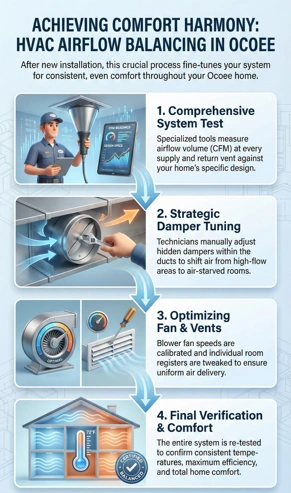
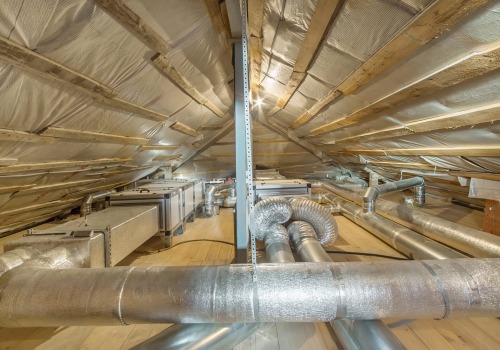
New HVAC equipment doesn't automatically sync with your existing ductwork. Every home has unique layouts, duct runs, and room sizes that affect how air travels from the unit to each register. Without calibration, conditioned air takes the path of least resistance—flooding some rooms while starving others.
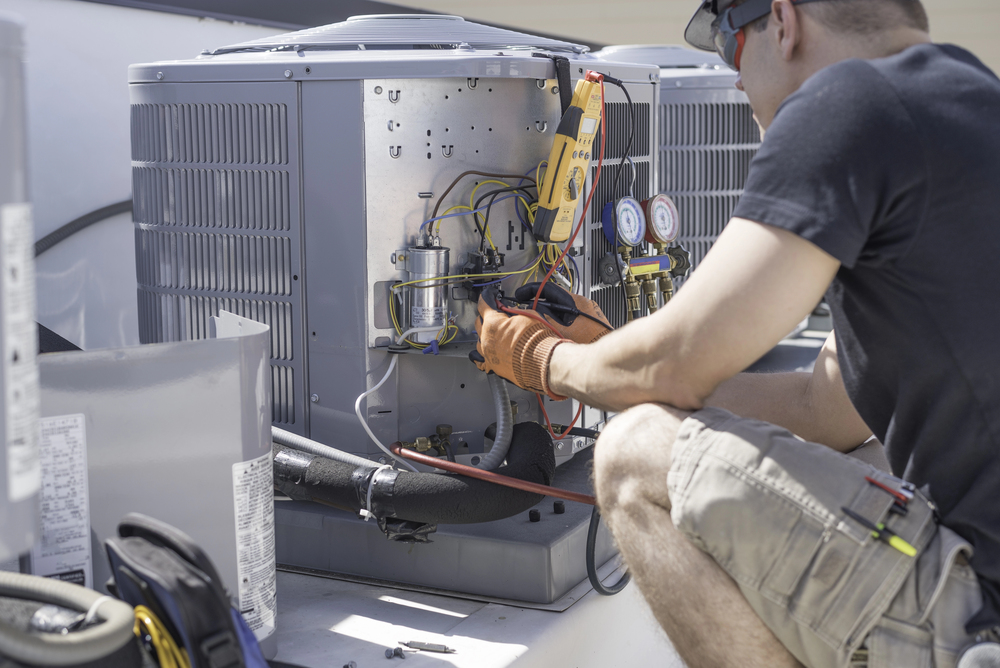
The balancing process begins with static pressure testing. Technicians measure pressure levels throughout the duct system using a manometer to identify restrictions or undersized ducts limiting airflow. Ocoee homes built before 2000 commonly show elevated readings due to original ductwork designed for less powerful equipment.
Next comes room-by-room CFM measurement. Using a flow hood or anemometer, technicians measure cubic feet per minute at each register to pinpoint exactly which rooms receive insufficient airflow versus those getting too much.
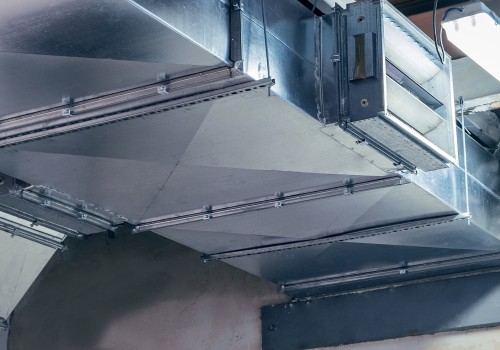
Damper adjustment typically resolves most issues we encounter. These internal ductwork valves control airflow volume—partially closing dampers feeding over-conditioned rooms redirects air to underserved spaces. In two-story Ocoee homes, technicians also optimize register louvers to direct ground-floor airflow upward, counteracting heat that naturally rises to second floors.
Properly balanced systems deliver consistent temperatures within two degrees throughout the home. Energy consumption typically drops 10-15% because the system cycles efficiently rather than overworking to satisfy the thermostat while neglecting other zones. Ocoee homeowners also notice improved humidity control once conditioned air reaches every room long enough to extract moisture.
"In our experience of balancing systems in Ocoee, we've found that 90% of post-installation comfort complaints trace back to damper settings that were never adjusted from the builder's original configuration—a 15-minute calibration that transforms how the entire home feels."
Essential Resources for HVAC Installation in Ocoee
At Filterbuy, we've helped thousands of Central Florida homeowners understand how new HVAC systems and proper filtration work together to deliver cleaner indoor air. These seven resources represent what our team recommends when customers ask about installation—because the right system, installed correctly, makes every filter change count.
1. Secure Your Permit Through Ocoee's Online System
Skipping permits might seem like a shortcut, but we've seen what happens when installations fail inspection months later. The city's online permitting portal makes it easy to submit applications before work begins—protecting your investment and ensuring your system meets code.
Resource: City of Ocoee Permitting Portal URL: https://www.ocoee.org/169/Permitting
2. Claim Up to $1,150 Back with OUC HVAC Rebates
Our customers in OUC territory often don't realize how much money they're leaving on the table. Heat pump systems rated 15.2 SEER2 or higher qualify for substantial rebates—just apply within six months of installation and the credit goes directly to your utility bill.
Resource: Orlando Utilities Commission Rebate Program URL: https://www.ouc.com/solutions-programs/savings/rebates/
3. Recover Up to $2,000 with Federal Energy Tax Credits
We always tell customers: the best time to upgrade is when the incentives align. Right now, qualifying heat pumps earn up to $2,000 back and central air conditioners up to $600 through IRS Form 5695. These credits cover 30% of equipment and installation costs through December 2025.
Resource: IRS Energy Efficient Home Improvement Credit URL: https://www.irs.gov/credits-deductions/energy-efficient-home-improvement-credit
4. Choose the Right Equipment with ENERGY STAR Guidance
Efficiency ratings matter—not just for your energy bill, but for how well your system works with quality filters. This official EPA resource explains SEER2 ratings, proper sizing, and helps you identify certified equipment that maximizes both performance and filtration.
Resource: ENERGY STAR Central Air Conditioner Guide URL: https://www.energystar.gov/products/central_air_conditioners
5. Navigate Orange County Permit Requirements
Some Ocoee-area properties fall under county jurisdiction rather than city. If your home is in unincorporated Orange County, this resource covers the mechanical permit process, inspection protocols, and fee schedules you'll need for a compliant installation.
Resource: Orange County Mechanical Permit Information URL: https://www.orangecountyfl.net/PermitsLicenses/Permits/MechanicalPermit.aspx
6. Understand What Makes a Contractor Truly Qualified
We've built relationships with HVAC professionals across Florida, and we know the difference between licensed and truly qualified. This guide breaks down Class A versus Class B licenses and the certifications that separate excellent installers from the rest.
Resource: Florida HVAC Contractor Licensing Guide URL: https://www.servicetitan.com/licensing/hvac/florida
Supporting Statistics: Why Proper HVAC Installation Matters
After helping thousands of Central Florida homeowners select filters, we've learned one truth: filtration is only as good as the installation behind it. These federal statistics validate what we observe daily.
70–90% of Residential HVAC Systems Have Installation Faults
DOE research confirms what we see constantly—the vast majority of systems underperform from day one.
What the data shows:
70–90% of AC and heat pump systems have at least one installation fault
Include duct leakage, and that number climbs to nearly 100%
What we hear from customers:
Brand-new systems that won't cool evenly
Filters clogging faster than expected
Humidity problems that shouldn't exist with new equipment
Nine times out of ten, we trace these issues back to installation—not the filter, not the equipment.
Source: U.S. Department of Energy URL: https://www.energy.gov/eere/buildings/articles/residential-hvac-installation-practices-review-research-findings
Poor Installation Wastes 20–40% of System Energy
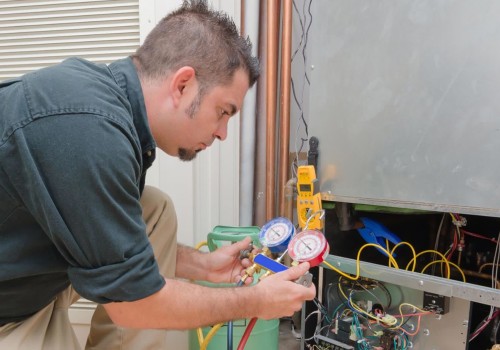
That premium 16 SEER unit? It might operate closer to 10 SEER if the installer cut corners.
Common installation failures:
Wrong equipment sizing for the home
Improper refrigerant charge
Inadequate airflow calibration
Leaky ductwork pulling in attic contaminants
The filter connection: Homeowners invest in high-MERV filters expecting cleaner air, but systems can't maintain proper airflow when installation was never optimized. The filter works—inside a system bleeding efficiency at every connection point.
Source: U.S. Department of Energy URL: https://www.energy.gov/eere/buildings/articles/residential-central-air-conditioning-and-heat-pump-installation-workshop
Americans Spend 90% of Their Time Indoors
EPA research drives everything we do at Filterbuy.
Key findings:
90% of time spent indoors on average
Indoor pollutant levels run 2–5x higher than outdoor concentrations
Children, elderly, and respiratory-compromised individuals face greatest exposure
Why this matters in Ocoee:
Humidity fuels mold and dust mite growth
Poorly balanced systems amplify contaminant buildup
Families breathe indoor air 21+ hours daily
A properly installed system with the right filter actively reduces the pollutant load your lungs process with every breath.
Source: U.S. Environmental Protection Agency URL: https://www.epa.gov/report-environment/indoor-air-quality
Final Thoughts: What Ocoee Homeowners Need to Know
Airflow balancing isn't glamorous. It doesn't show up in marketing brochures or get mentioned during sales pitches. But after years of helping Central Florida homeowners troubleshoot comfort problems, we can say with certainty: this single post-installation step separates systems that perform from systems that disappoint.
What the data and our experience confirm:
New equipment alone doesn't guarantee comfort—calibration does
70–90% of systems have installation faults compromising performance
Poor installation wastes 20–40% of your energy investment
Ocoee's humidity amplifies every airflow problem
Your filter only works as well as the system delivering it
Our Opinion: Airflow Balancing Should Be Non-Negotiable
Too many contractors treat installation as one-and-done. Equipment goes in, refrigerant gets charged, the system turns on—next job. Airflow balancing gets skipped because it takes time and doesn't add to the invoice.
Homeowners pay for that shortcut every month.
What we've observed with Ocoee customers:
Those who insist on balancing report fewer comfort complaints
Properly balanced systems extend filter life by 20–30%
Humidity issues often disappear once airflow reaches every room
Energy savings compound over thousands of operating hours
Pro tip: When evaluating quotes, ask about airflow verification and static pressure testing. Vague or dismissive answers tell you everything you need to know.
Next Steps: Your HVAC Installation Action Plan
Protect your investment with this straightforward checklist.
Before Installation
Verify contractor credentials:
Search Florida DBPR database for active license status
Confirm insurance and bonding
Check Google, BBB, and Angi reviews
Secure permits:
Submit through Ocoee's online portal
Never skip this step—unpermitted work fails inspections and voids warranties
Request Manual J load calculation:
Ensures proper equipment sizing
Square footage estimates alone aren't enough—find another contractor if that's all they offer
During Installation
Confirm matched components:
Indoor and outdoor units must be rated together
Mismatched parts void warranties and reduce efficiency
Verify duct sealing:
Leaky ducts waste 20–30% of conditioned air
Request duct leakage testing results before signing off
Document everything:
Equipment model numbers
AHRI certificates
Permit receipts
Contractor invoices
1–2 Weeks After Installation
Schedule airflow balancing with static pressure testing
Track rooms running hot, cold, or humid
Test heating and cooling modes before warranty window closes
Report issues immediately
Within 6 Months
Claim rebates:
OUC customers: Up to $1,150 at ouc.com
Deadline is six months from installation
File federal tax credits:
Up to $2,000 on heat pumps
Up to $600 on central AC
Use IRS Form 5695
Select the right filter:
Balanced systems handle MERV 13
Restricted ductwork may need MERV 8–11
Not sure? We help Ocoee homeowners match filters daily
Ongoing Maintenance
Replace filters every 60–90 days (monthly during peak summer)
Schedule annual professional maintenance before cooling season
Monitor utility bills for unexpected spikes
Keep vents and returns unobstructed
FAQ on "HVAC Installation in Ocoee"
Q: Do I need a permit for HVAC installation in Ocoee?
A: Yes—no exceptions.
What you need to know:
City of Ocoee requires permits before work begins
Submit applications through the online portal or call 407-905-3104
Unpermitted work fails inspections and voids warranties
What we've seen: Homeowners who skip permits face complications when selling. If a contractor suggests bypassing this step, find a different contractor.
Q: How do I verify an HVAC contractor is licensed in Florida?
A: Search the Florida DBPR database at myfloridalicense.com. Takes less than a minute.
How to verify:
Enter contractor name or license number
Confirm active status
Check for disciplinary history
Red flags from our experience:
Contractor won't provide license number
Gets defensive when asked
License not displayed on truck, website, or contract
The contractors who cause problems are almost always unlicensed or expired.
Q: What rebates are available for HVAC installation in Ocoee?
A: More than most homeowners realize.
OUC rebates:
Up to $1,150 for heat pumps rated 15.2 SEER2+
Must apply within six months of installation
Credits go directly to utility bill
Federal tax credits (through December 2025):
Up to $2,000 for qualifying heat pumps
Up to $600 for central air conditioners
File using IRS Form 5695
Our advice: Keep every receipt, AHRI certificate, and invoice from day one. Chasing paperwork months later is a headache nobody needs.
Q: How soon after installation should airflow balancing be done?
A: One to two weeks post-installation.
Why this timing works:
System runs through multiple cycles first
Obvious issues surface before balancing appointment
Allows accurate baseline measurements
What balancing includes:
Static pressure testing
Room-by-room CFM measurement
Damper adjustments
Typically takes 2–4 hours
What we've learned: Ocoee customers who insist on this step report dramatically fewer comfort complaints. Those who skip it often call months later wondering why their new system can't cool the back bedrooms.
Q: How do I know if my new HVAC system needs airflow balancing?
A: Watch for these signs—we hear about them constantly from Central Florida homeowners.
Common symptoms:
Temperature swings greater than 3°F between rooms
Some registers blasting while others barely push air
Humidity lingering in specific areas
Thermostat satisfied but bedrooms uncomfortable
Here is the nearest branch location serving the Jupiter FL area…
Filterbuy HVAC Solutions - West Palm Beach FL
1655 Palm Beach Lakes Blvd ste 1005, West Palm Beach, FL 33401
(561) 448-3760